In 2021, families across India booked a new car, paid the deposit, and then got strange news: the car was built and sitting ready, but delivery would take six months. The hold-up was a single chip, made in a factory an ocean away. A shortage that started in global politics ended at a showroom counter in an Indian city.
A Global Story That Lands on One Desk
That's what most people miss about a crisis like this. The world reads it as a political story. A company reads it as a part that didn't show up on Tuesday. And inside the company, the problem always lands on one desk.
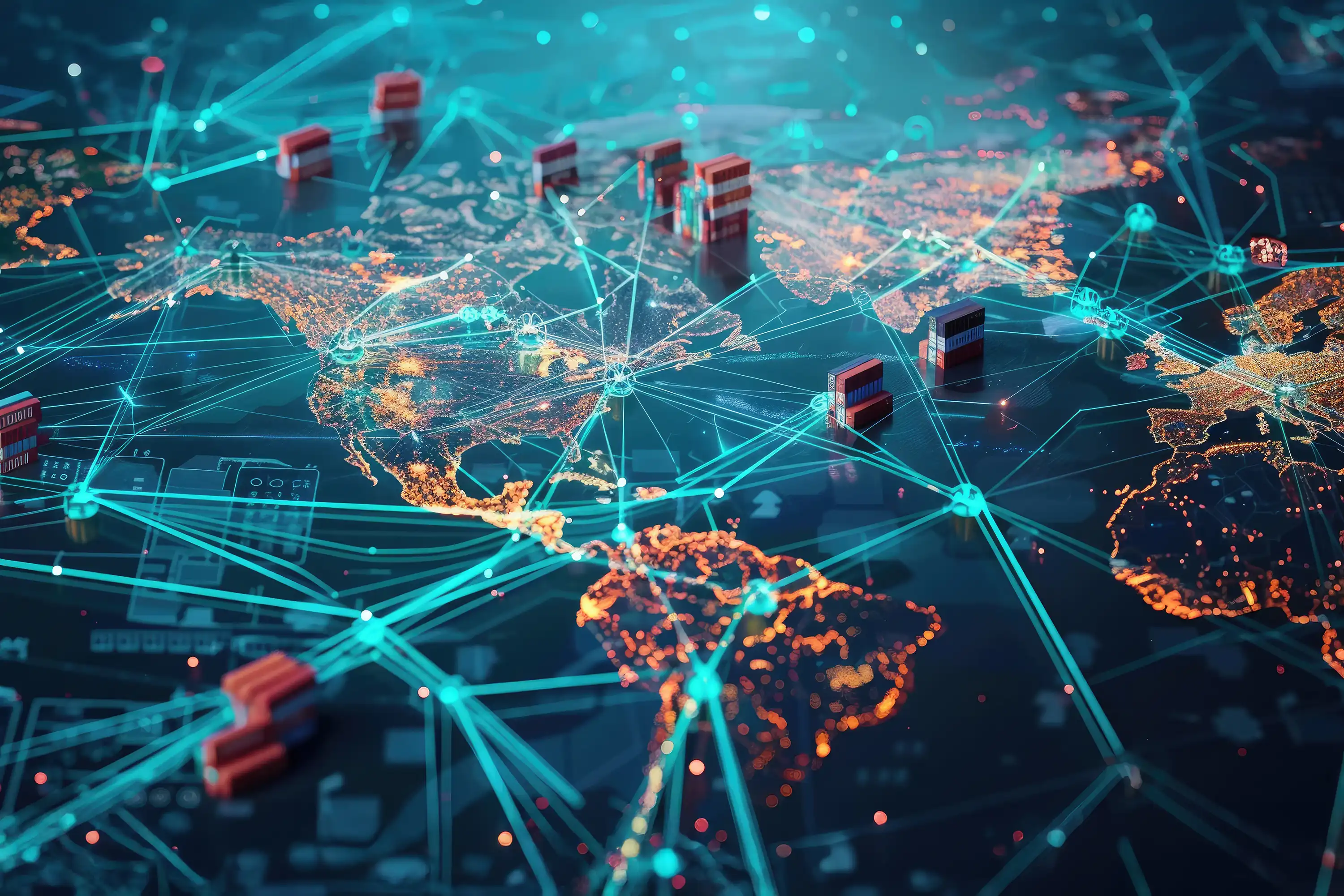
Here's why. A phone carries minerals from one country, chips from another, assembly from a third, then sells in a hundred more. Every product is a chain of countries holding hands, and the moment one lets go, the whole line feels it.
The Shocks Keep Coming
That line keeps getting shaken. The pandemic shut factories and ports everywhere at once. The war in Ukraine drove up energy, grain, and fertilizer prices well beyond its own borders.
Then the Red Sea: traffic through the Suez Canal fell by as much as 90%, every rerouted ship added 10 to 14 days to its journey, and J.P. Morgan says the detours alone erased close to 9% of the world's shipping capacity. Freight rates between Asia and Europe still sit 25 to 40% above normal. Add the friction between the US and China, and IDC now expects half of all companies to spread their sourcing across several regions rather than lean on one.
The Question Has Changed
Every shock taught the same costly lesson. For thirty years, one question shaped every supply chain: what's cheapest? That's no longer enough. The harder question now is what still works when something breaks, and McKinsey found 93% of senior supply chain leaders rebuilding their networks to answer exactly that.
In plain terms: buying the same part from more than one country, moving production closer to customers, holding smarter stock instead of the bare minimum, and using AI to predict demand and track every shipment on the move.
This Isn't a Warehouse Job Anymore
Someone has to do all of that, and it's not the job most students picture. Supply chain work left the warehouse long ago. The people doing it now sit where strategy, data, and technology meet: pricing out what a closed port really costs, judging whether a backup supplier is worth the premium, running the systems that let a company watch its own goods cross the world in real time.
That's how the job reached the boardroom, and why pharmaceuticals, cars, electronics, retail, food, and airlines are all hiring for it.
What the Numbers Say
The US Bureau of Labor Statistics expects logistician jobs to grow 17% through 2034, nearly five times the average. And after a 2025 survey found 94% of companies had lost money to disruption, titles like Supply Chain Analyst, Demand Planner, Procurement Specialist, and Supply Chain Risk Analyst keep landing on hiring lists in every major market.
None of this makes a crisis good news, and no world event hands anyone a guaranteed job. But uncertainty isn't going anywhere, and every company now knows exactly what an unprepared supply chain costs. The people who can keep goods moving when the world turns difficult have quietly become some of the most valuable in business, and everything about the next few years says they'll stay that way.
The next global disruption is impossible to predict. The people who know how to navigate it will always be in demand.
If This Field Has Your Attention
...the programme you choose will shape whether you enter it through operations, analytics, or strategy. That's exactly what our events are for: real conversations with university reps and current students about which supply chain and logistics programmes actually connect to the roles companies are hiring for right now. See what's coming up.