Every device you touched today had one thing in common, and you almost certainly didn't notice it. The phone that woke you, the car that moved you, the server that processed your payment, and the scanner in the hospital down the road all run on pieces of silicon smaller than a fingernail. The market for those tiny chips is expected to reach about $975.5 billion in 2026, with memory and logic chips each growing by more than 30% in a single year because of artificial intelligence. Nearly a trillion dollars, built on a product most people have never once seen.
The Work Behind Every Chip
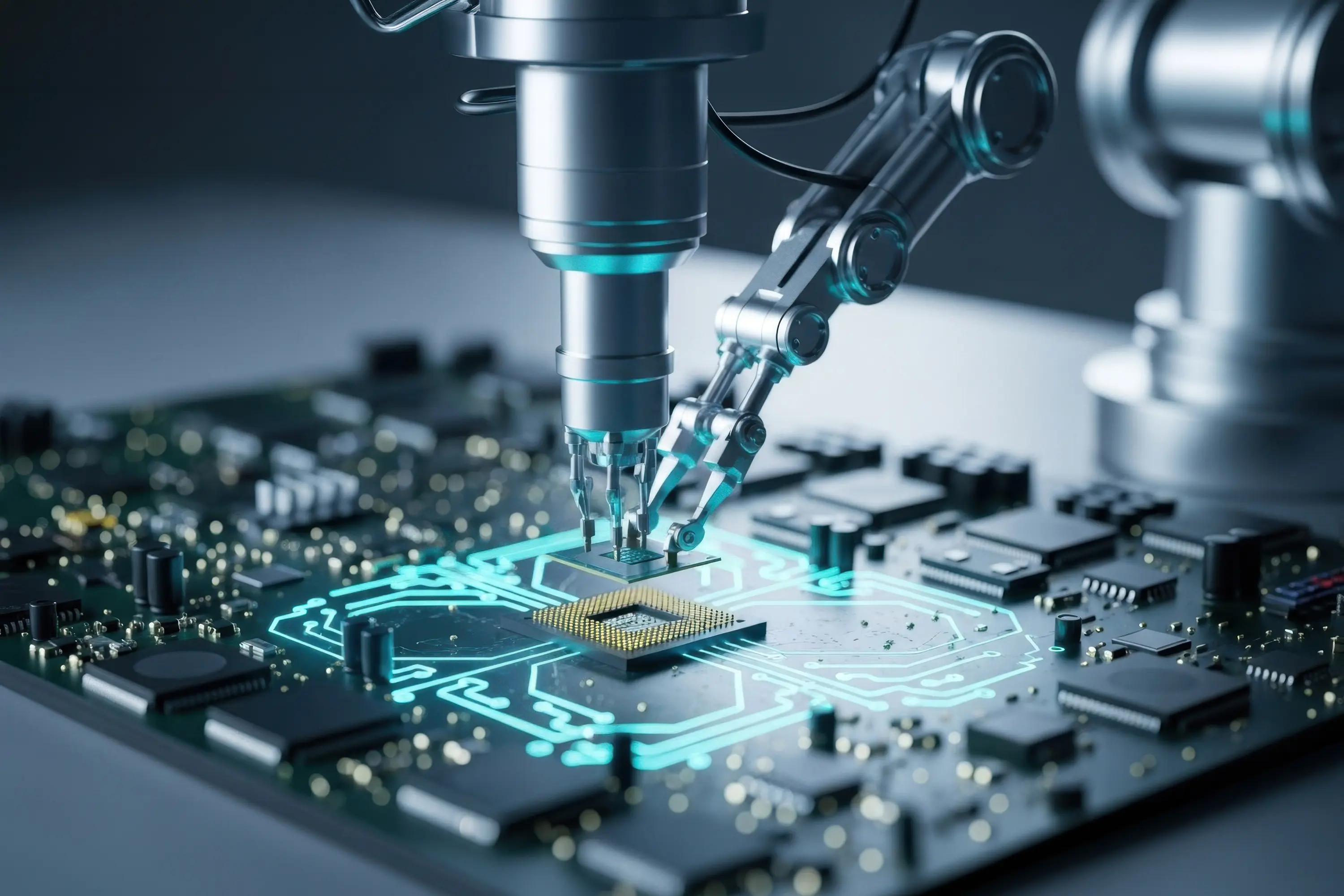
That hidden nature is exactly what makes this field worth understanding. Semiconductor engineering is the work behind every one of those chips: designing the circuits, building them inside ultra-clean rooms, testing them for faults too small for any eye to see, and packaging them to survive years inside a device. When a chip fails, a car stalls, a scanner misreads, or a data centre goes dark. The work stays hidden only until something breaks.
Why Nations Are Fighting Over It
The United States has committed over $50 billion through its CHIPS Act. Taiwan dominates advanced chip manufacturing through TSMC, South Korea leads in memory chips, and Japan and the Netherlands control the materials and machines the rest of the industry can't work without.
India, long a watcher in this race, has stopped watching. Tata Electronics has announced an approximately $11 billion chip fab project in Dholera, with ASML as a strategic lithography partner. Micron's assembly and test plant in Sanand became operational in February 2026. Quietly, India is also often cited as home to close to 20% of the world's chip design workforce.
The Problem Money Can't Solve
There aren't enough people. Industry estimates point to a global shortage of one million semiconductor workers by 2030. Taiwan, the most experienced chip nation on earth, has tens of thousands of engineering jobs it can't fill today.
A shortage that big changes who gets in. Electronics and Computer Engineering are still the main routes, but Physics, Materials Science, Nanotechnology, and Mechatronics graduates are now being pulled into process engineering, chip testing, and AI hardware, because the industry can no longer afford to hire only circuit designers.
The Work Is More Varied Than Most Students Think
- A VLSI or ASIC engineer designs the logic of a chip.
- A physical design engineer decides how that logic fits onto silicon.
- An embedded systems engineer makes it come alive inside a real device.
- A process engineer keeps a factory line running at a precision finer than a human hair.
- A test engineer stands at the end of the line making sure nothing ships broken.
Nobody does all of it. That's exactly why a well-prepared graduate is rarely short of a way in.
Not every engineer should chase this field, and it won't be the only one shaping the next ten years. But look at what depends on it: AI, electric vehicles, defence, and clean energy. Every one of them runs on hardware someone must design, build, and test, and entire countries are now spending billions to make sure that someone exists.
The students who enter semiconductor engineering now aren't just joining an industry. They're joining the foundation every other industry is standing on. The future is being built one chip at a time.
If You're Ready to Be Part of That
...the entry route matters as much as the interest: which degree, which country's fab ecosystem, which specialization inside the field. That's exactly what our events are for: real conversations with university reps and current students about which programmes actually connect to chip design, fabs, and testing roles, not just a general engineering brochure. See what's coming up.